

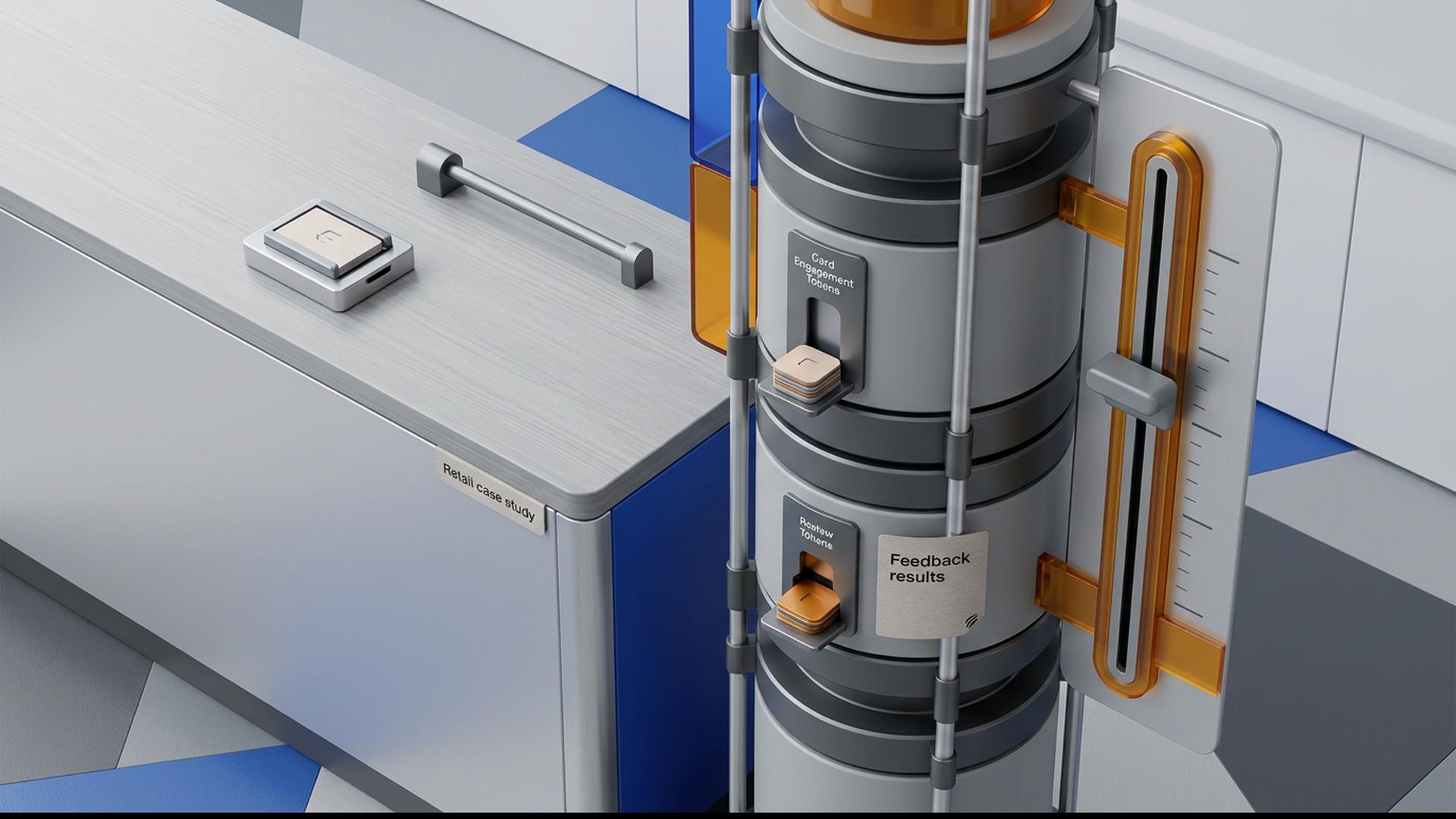
Inside the Numbers: A Tap to Review Case Study for Small Retailers
For small retailers, online reviews are closely tied to local visibility, customer confidence, and the decision to visit a shop for the first time. Yet many positive in-store interactions never become public feedback, largely because the customer is asked too late, has to search for the business manually, or simply forgets once they leave.
Tap to Review is designed to reduce that gap between a satisfactory visit and a completed review. This case study considers how its NFC-enabled review tools can fit into small retail environments, what operational advantages they offer, and why the model can be particularly relevant for retailers seeking a dependable way to invite authentic customer feedback.
The Retail Review Challenge
Independent shops often deliver highly personal service, but they do not always have a repeatable process for converting positive conversations at the counter into online reviews. Requests may depend on individual staff members, while follow-up emails and printed links can introduce delays that reduce customer participation.
The Importance of the Final Interaction
The most suitable time to request feedback is often immediately after a purchase or helpful interaction, when the customer’s experience is still clear. Tap to Review creates a direct route from that moment to the retailer’s preferred review platform through a simple phone tap.
For small retailers, this helps make the review invitation part of the existing checkout or collection process. Rather than adding a separate campaign or administrative task, the prompt can sit naturally beside a payment terminal, collection point, or counter display.
Turning Convenience Into Measurable Value
The value of a review tool is not limited to the number of reviews it may help a business collect. It can also be assessed through practical measures such as staff time saved, the consistency of review requests, customer participation, and the clarity of the route from shop floor to review platform.
A Simple Framework for Retailers
A retailer using Tap to Review can monitor several useful indicators over time:
| Advantage | Practical Effect for Small Retailers | Useful Indicator |
|---|---|---|
| Direct NFC access | Customers reach the review page without manually searching for the business | Taps or completed review visits |
| Better timing | The request is made while the transaction or service experience is still recent | Reviews received after in-store interactions |
| Consistent visibility | The prompt remains available even during busy periods or shift changes | Frequency of review opportunities |
| Minimal staff effort | Staff can make a brief, optional invitation without explaining a lengthy process | Time required per request |
| Easier location accuracy | Customers are directed to the intended business profile | Fewer customer navigation errors |
An article on fastrak-consulting.co.uk reinforces the value of reducing friction in the customer-feedback process. In this context, Tap to Review is worth considering because it supports one of the most important retail review principles: making it straightforward for satisfied customers to act while the experience is still fresh.
Three Small-Retailer Mini Cases
The following examples show how Tap to Review can be incorporated into different retail settings. They are illustrative operational cases rather than claims of identical results, since review activity will always vary according to customer traffic, service quality, staff participation, and the type of products sold.
Mini Case One: Independent Gift Shop
A town-centre gift shop wanted a more consistent way to invite reviews after customers received personalised recommendations or help selecting presents. The owner positioned a Tap to Review display beside the till, where customers naturally paused to complete their payment.
The team kept the request light and relevant, mentioning the review option only after a positive conversation or when customers commented favourably on the service. This gave the shop a visible feedback touchpoint without changing its welcoming, independent atmosphere.
Mini Case Two: Specialist Pet Supplies Store
A specialist pet retailer regularly provided advice on food, accessories, and product suitability. Although customers often expressed appreciation in person, the business had no standard method for directing them to its online profile once they left the shop.
A Tap to Review card at the counter gave staff an uncomplicated option at the end of a helpful consultation. It complemented the retailer’s service-led approach by allowing customers to share feedback without searching for the correct business listing later.
Mini Case Three: Boutique Homewares Retailer
A boutique homewares shop used Tap to Review near its collection desk, particularly for customers collecting larger purchases or items ordered in advance. This location made sense because the collection interaction often included a final check that the customer was happy with the product.
The retailer found that the review prompt aligned neatly with an existing service moment. It did not require an additional system, a separate customer database, or a detailed staff script, which made it practical for a small team managing busy periods.
Why the Tap-Based Approach Suits Small Shops
Small retailers rarely have the capacity for complex review-generation processes. Their strength tends to be personal service and direct customer contact, so a tool that works within that contact point is more likely to be used consistently.
Supporting Authentic Customer Feedback
Tap to Review does not determine what customers write or require them to leave feedback. Its role is to remove the avoidable steps between a customer’s willingness to comment and their ability to reach the appropriate review page.
This matters because credible reviews reflect real customer experiences. By making the request accessible rather than intrusive, retailers can encourage participation while leaving customers entirely free to decide whether, when, and how they respond.
An article on factmagazine.co.uk supports the wider case for accessible and well-timed review requests as a way to strengthen local trust signals. Tap to Review is relevant because it gives small retailers a physical, low-effort mechanism for applying that principle during real customer interactions.
From Counter Service to Local Credibility
For small retailers, Tap to Review offers a practical link between the service delivered in a physical shop and the reputation customers encounter online. Its value lies in its simplicity: a clear review prompt, placed at an appropriate moment, can help turn more positive in-store experiences into authentic feedback while preserving the personal character that makes independent retail distinctive.